

It’s been a busy few weeks. From sizeable M&A deals (LiveRamp, Vibe) to unbearably hot and sweaty industry events, the industry has been running at breakneck speed. As we head into a downtime period - between Cannes and ATS London - this is as good a time as any to discuss the evolving FPC investment thesis.
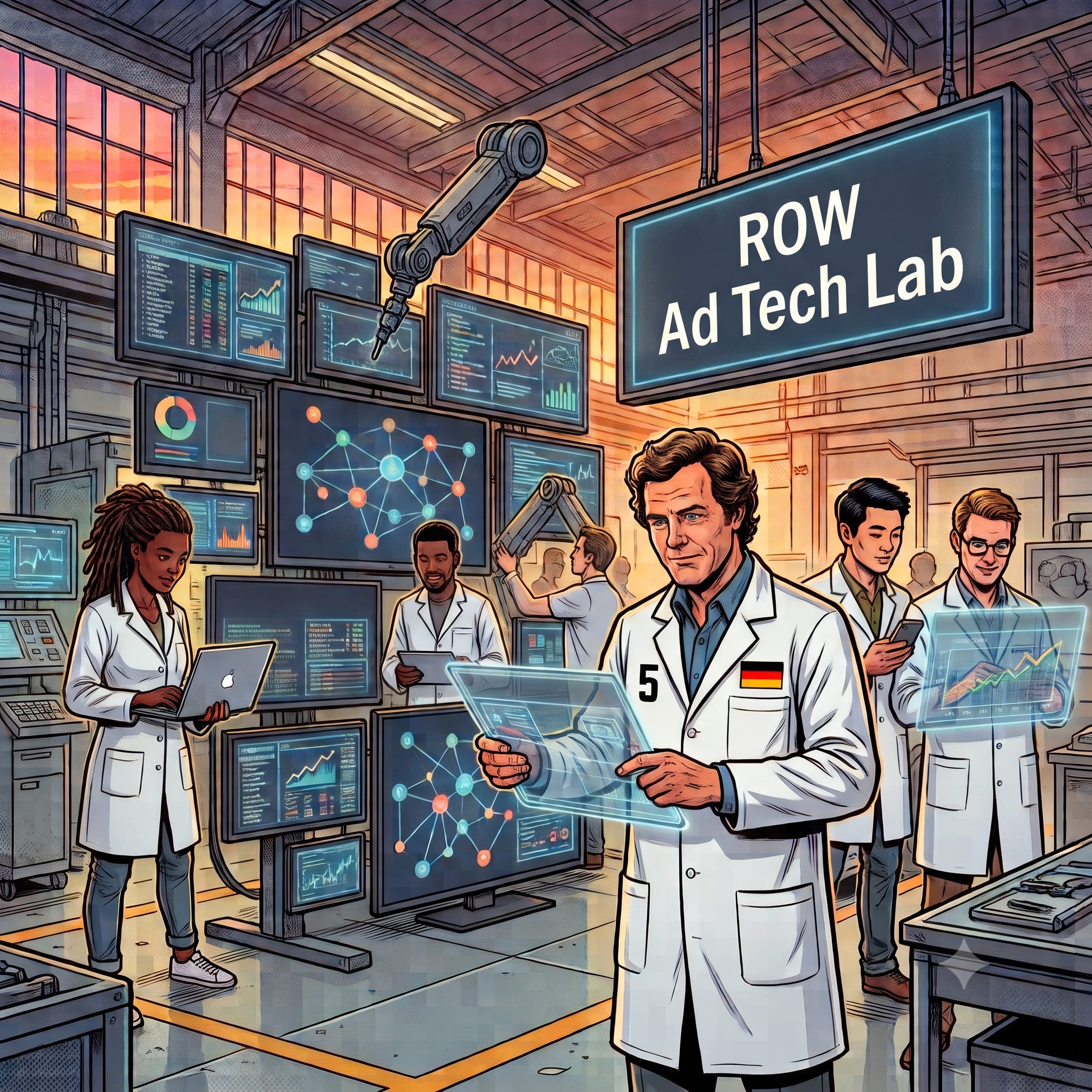
With Fund 2, we are embarking on an ambitious project to build a counterweight to the dominant US ad tech investment strategy. Overlooked and undervalued opportunities are being missed by the industry at large. This is why we are looking to incubate even more startups focused on non-US, non-China markets. In this edition, we discuss the US ad market and the rationale behind our ROW incubation play.
The US Ad Market: A Dominant Force
The US ad market is the largest in the world. It supports a huge ad tech ecosystem - from vendors to tentpole trade shows to influencers to trade press. It’s why you can have ad networks you’ve never heard of doing 9-digit revenue. Easy when a small US regional market has a bigger programmatic spend than Spain and Portugal combined.
Standalone international markets like the UK and Germany pale in comparison to the sheer might of the US hegemon. It is an obvious draw for Euro ad tech because it is relatively easy to navigate - evolved infrastructure, agreed tech standards and loose privacy laws. American exceptionalism certainly applies to scaled media buys. Ad tech, in its current form, is very much built for the US.
The recent exit of Vibe to Walmart cemented the traditional European ad tech exit: startup goes stateside, hustles hard, raises big, builds a product in a hot area of ad tech (SME CTV), and sells for a billion-plus.
Now if the US is your ultimate objective, do not mess about: you need to get there ASAP. Get backed by Aperiam, Progress Ventures or S4S Ventures. Win the loving embrace of the US ad tech influencers and tastemakers. Get on a podcast with Paparo, Franchi, Zappa, Zawadski. Make friends at AdExchanger, AdWeek, and Digiday. Play the game, as Arthur has done brilliantly. Bravo, sir.
Vibe had the good fortune of being in a strong category at the right time. TVScientific had already sold for $400 million - and there weren’t many other scaled plays to buy. If you are going all in, perhaps think about a Kansas City or Midwestern base - not NYC. There are over 4,000 indie agencies (mostly regional) with significant programmatic spend. Start there, work hard, and success will follow. Follow the MIQ blueprint: regional first, metro second. Lee and G have shown the way.
Incubating Ad Tech Future For ROW
Being a fast follower of US ad tech, where you are essentially arbitraging lower product-build and staffing costs, is a tried-and-tested path. But it comes with its own set of problems.
One, it can be an expensive game to play - and a highly speculative investment strategy - as US expansion requires a lot of capital. Two, it overlooks the huge opportunities outside the US. And three, building for the US alone can be somewhat myopic, limiting non-US startups to tiny TAMs as they chase their over-funded US peers.
This is why there is such a gulf between the US and ROW in terms of exits and investor value. In America, you have an ad market that makes the ad tech layer look massive in comparison with other geos. Mostly because nobody has ever really invested/built beyond that set US-only framework.
FPC (and other funds, to a lesser degree) has now made real investments and allocated resources to ROW ad tech.
FPC has allocated capital in Fund 1 to startups pursuing these unique market opportunities. DigitalAudience and Evorra on the data management and activation side are good examples of this. Both are built from the ground up with privacy at its core - and both make multi-country buys possible.
DigitalAudience has been developing the data spine for European buyers and sellers. It has built tech and billing integrations with all the big platforms and walled gardens. It’s super boring stuff - but necessary infrastructure to scale media buys. With LiveRamp and Lotame now in Publicis’s hands, DA is now one of the most strategic assets in ad tech.
You will see more of this from Fund 2. The FPC incubation model is the logical evolution of this thesis. We will have at least 6 or 7 new incubations in the Fund 2 portfolio.
Why the incubation route? We need to broaden the application of ad tech beyond just a US-only narrative - otherwise we as a fund are leaving money on the table. Look at what is relevant around us and build for that, whether it’s a regulatory shift, data sovereignty, data ownership or a scaled adjacent-industry application.
US and ROW will co-exist, but the divergence we talked about in a previous post is starting to happen - and we are investing for it.
Our strategic investors, such as Index Exchange and DoubleVerify, recognise the opportunity, and we are working together on exciting corporate innovations. And there will be more of these partnerships to announce in the coming six months.
The US ad market will always remain a huge opportunity for our portfolio, but the incubation strategy will take precedence for Fund 2 as we look to build for scaled, localised opportunities (untapped and unloved).
We will provide more details on these incubations in a Q3/Q4 webinar. We are excited about these greenfield projects, as we aim to break new ground.
After a number of years doing this, we feel we are finding FPC’s natural investment position in the $5 trillion marketing industry. To use a crude football analogy, we are like Franz Beckenbauer, evolving from a box-to-box midfielder to sweeper, thereby transforming the game forever. It’s our Der Kaiser moment, if you will.
On that epic World Cup reference, we will leave it there. As ever, reach out if you want to know more about our investment and corporate innovation strategy.